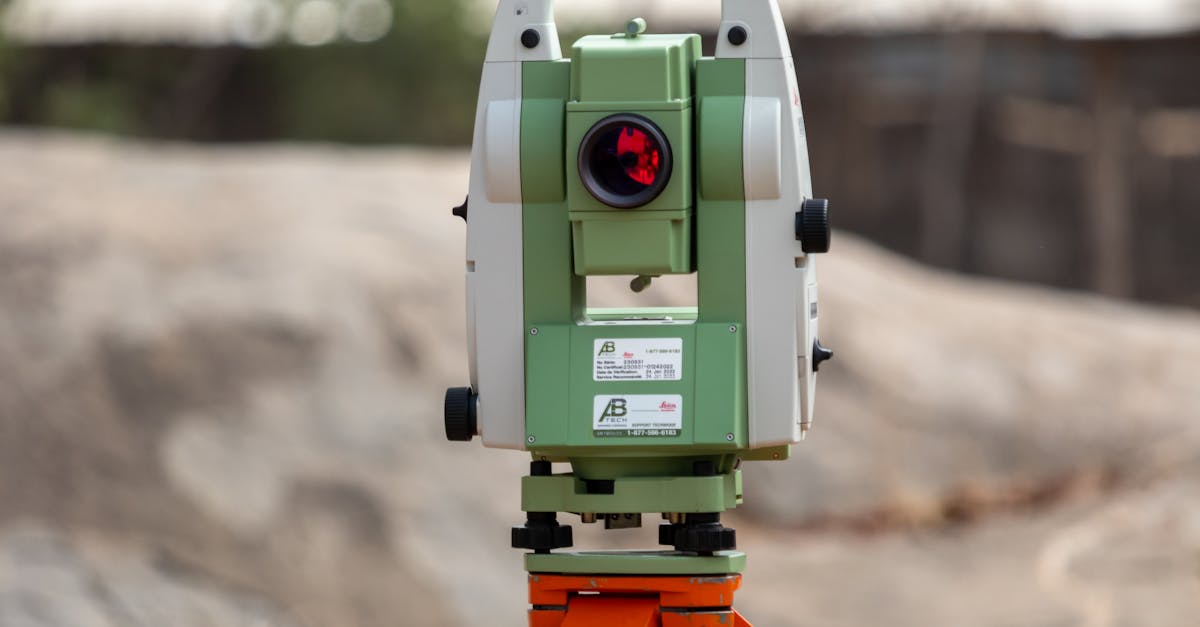
The Advantages of Using Total Stations for Accurate Measurements
Table Of Contents
Data Storage and Management
Total stations come equipped with advanced data storage capabilities that allow for efficient handling of measurement data. Users can easily store large volumes of information, including coordinates, measurements, and observations. This digitalisation simplifies the organisation of data, making retrieval and analysis straightforward. The ability to manage data electronically reduces reliance on paper records, promoting an environmentally friendly approach to surveying and construction projects.
In addition to streamlined data management, total stations often integrate with software tools designed for further analysis. This integration enhances the workflow by allowing surveyors to manipulate and interpret data quickly. The built-in functions facilitate real-time data evaluation, which can improve accuracy in project planning and execution. These features empower professionals to make informed decisions based on precise and readily accessible measurements.
Benefits of Digital Data Handling
The transition to digital data handling in total stations has revolutionised the way measurements are recorded and processed. With the ability to store vast amounts of data in a compact format, retrieving specific measurements becomes incredibly straightforward. This technological advancement eliminates the need for extensive paperwork, reducing the likelihood of human error during data entry. Furthermore, digital files can be easily accessed, shared, and archived, facilitating collaboration among team members and enhancing productivity on job sites.
The integration of software tools with total stations allows for sophisticated data analysis and visualisation. Users can create detailed reports, perform complex calculations, and generate accurate models from collected data. This transition not only streamlines workflows but also enhances decision-making capabilities for project managers and engineers. By leveraging digital data handling features, professionals can ensure that their measurements are not only precise but also readily available for future reference and auditing.
Cost-Effectiveness Over Time
Investing in total stations can lead to significant long-term savings for construction and surveying projects. These instruments provide high levels of accuracy and efficiency, reducing the need for re-measurements and minimising costly errors. Over time, the reliability of total stations translates into fewer delays and lower labour costs. When projects adhere to schedules, overall expenses decrease, enhancing the financial viability of using advanced measurement technologies.
Moreover, the durability and low maintenance of total stations contribute to their cost-effectiveness. Unlike traditional measuring tools, which may wear out quickly or require frequent calibration, total stations are designed to withstand various environmental conditions. This resilience ensures that they maintain performance without incurring excessive repair or replacement costs. Consequently, the initial investment in such instruments pays off in sustained operational efficiency and reduced long-term expenses.
Long-Term Savings with Total Stations
Investing in total stations can lead to substantial financial benefits over time. Their precision reduces errors, which means less time and resources spent on redoing tasks. The ability to quickly gather and store data also increases efficiency on site. This streamlining of processes results in lower labour costs and improved productivity.
In addition to direct savings, the durability of total stations contributes to their cost-effectiveness. These instruments are designed to withstand challenging conditions, decreasing the likelihood of frequent replacements. With proper maintenance, a quality total station can serve projects for years without the need for significant investment in new equipment. The cumulative effect of these factors makes total stations a wise choice for long-term use in surveying and construction.
Enhanced Safety Features
Total stations incorporate various safety features designed to enhance user protection and promote safe working conditions. Many models include advanced sensors that detect obstructions in the path of the instrument, reducing the risk of accidental injury or property damage. Additionally, ergonomic designs and intuitive controls help minimise operator fatigue, making it easier for users to maintain focus during extended periods of operation in the field.
Moreover, total stations often include safety measures like self-leveling mechanisms and stabilisation features that ensure accurate measurements despite uneven terrain. Some models come with comprehensive error detection systems, providing audible or visual warnings in case of misalignment or miscalibration. These features collectively contribute to a safer working environment, allowing surveyors and engineers to concentrate on their tasks with peace of mind.
Reducing Risks in Measurement Environments
In construction and surveying, accuracy is paramount. Total stations excel in providing precise measurements while minimising the potential for human error. Deploying automated features significantly reduces risks associated with manual measurement techniques. By utilising robust data collection methods, surveyors can ensure that critical inaccuracies are less likely to occur, enhancing the overall reliability of the project.
The design of total stations prioritises safety in various environments. These instruments often come equipped with features that allow operators to maintain safe distances from hazardous sites. Implementing remote functionalities allows users to perform measurements without being in potentially dangerous zones. This approach not only protects the wellbeing of the operators but also contributes to a more efficient workflow.
FAQS
What is a total station and how does it work?
A total station is a modern surveying instrument that combines an electronic theodolite for measuring angles with an electronic distance measuring device (EDM). It allows for precise measurements of distances and angles, and it can store data digitally for later use.
What are the benefits of using total stations for data storage and management?
Total stations offer advanced digital data handling capabilities, allowing users to store large quantities of measurements efficiently. This digital management simplifies data analysis and sharing, reducing the risk of errors associated with manual recording.
How do total stations provide cost-effectiveness over time?
While the initial investment in a total station may be higher than traditional surveying tools, the long-term savings stem from increased efficiency, reduced labour costs, and the minimisation of human error. These factors can significantly lower project costs over time.
What enhanced safety features do total stations offer?
Total stations are designed to improve safety in measurement environments by minimising the need for personnel to be in potentially hazardous locations. Their remote operation capabilities and precise measurements help reduce risks associated with traditional surveying methods.
Are total stations suitable for all types of surveying projects?
Yes, total stations are versatile instruments used in various surveying applications, including construction, land development, and geological surveys. Their accuracy and efficiency make them suitable for both small and large-scale projects.
Related Links
Best Practices for Operating Total Stations in the FieldTraining Requirements for Effectively Using Total Stations
Troubleshooting Common Issues with Total Station Devices
Integrating Total Stations with Survey Software for Enhanced Analysis
Future Innovations in Total Station Technology for Surveying
The Role of Total Stations in Elevation and Slope Measurements