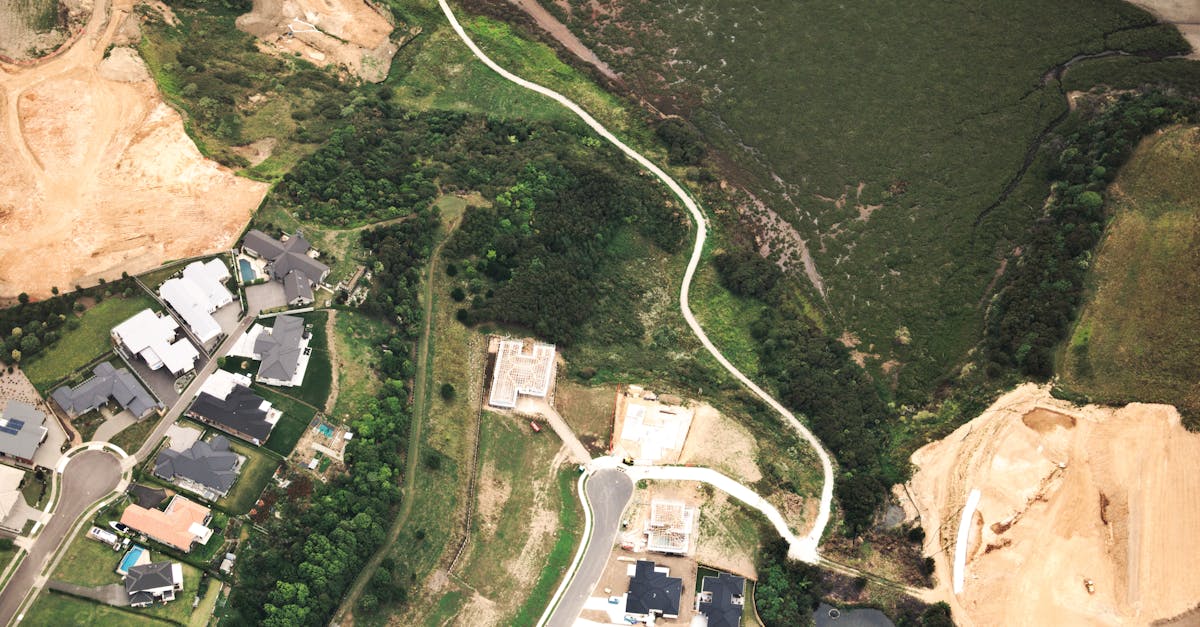
Key Techniques Used in Construction Surveys
Table Of Contents
Surveying Equipment and Tools
Accurate data collection is essential for successful construction projects, and a variety of equipment and tools are utilised to achieve this. Theodolites remain a foundational tool, allowing surveyors to measure angles with precision. Additionally, levels and measuring tapes play a crucial role in determining elevation and distance. The advent of modern technology has introduced advanced equipment such as global positioning system (GPS) devices, which enhance accuracy and efficiency by providing real-time location data. Drones are becoming increasingly popular, offering aerial perspectives that assist in mapping and site analysis.
Another vital component of the surveying process is data collection software, which helps in interpreting and managing the information gathered. Surveying instruments often come equipped with software that allows for seamless integration and analysis of data. This technological advancement enables surveyors to create detailed topographical maps and 3D models. Utilising these tools not only streamlines the workflow but also significantly reduces the chances of human error, ensuring a higher level of accuracy in the final output.
The Use of Total Stations
Total stations represent a significant advancement in surveying technology, combining electronic theodolites and distance measuring capabilities. They enable surveyors to capture precise angles and distances simultaneously, facilitating an efficient and accurate method for gathering data in a wide range of construction projects. The integration of GPS with total stations has further enhanced their functionality, allowing for real-time positioning and easy data transfer.
The versatility of total stations makes them suitable for various applications, including boundary surveys, construction staking, and topographic mapping. Their user-friendly interfaces and digital displays simplify the process for surveyors. Increased portability due to compact designs allows for ease of transportation and setup on-site, making them indispensable tools in modern surveying practices.
Legal Considerations in Construction Surveys
Construction surveys are subject to various legal standards and requirements that ensure compliance with local and national regulations. Surveyors are often responsible for obtaining the necessary permits before commencing any work. These permits verify that the proposed construction activities adhere to zoning laws, environmental protection regulations, and land use policies. Ignoring these legal stipulations can lead to significant delays, costly fines, and even the halting of projects.
In addition to permits, surveyors must also consider the implications of property boundaries and ownership rights. Accurate delineation of these boundaries is crucial to avoid future disputes with adjoining landowners. Knowledge of easements, encroachments, and any existing legal claims is vital in preventing potential legal issues. This diligence not only safeguards the interests of the property owner but also upholds the integrity of the surveying practice itself.
Permits and Regulations
Construction surveys require adherence to a range of legal permits and regulations that can vary significantly depending on the project's location and scope. Local councils typically establish guidelines that must be followed before actual surveying activities commence. These regulations ensure that the survey operations comply with land use policies, environmental protection laws, and safety standards. It is crucial for surveying professionals to conduct thorough research into these requirements to avoid potential legal complications.
In addition to local council stipulations, there may be state and territory legislation that governs construction surveys, especially for projects involving public land or sensitive environments. Obtaining the necessary permits involves submitting detailed applications that outline the proposed surveying activities and their impact on the surrounding area. Failure to secure the required permissions can result in fines, project delays, or even the cessation of operations, making it imperative for surveyors to navigate the permitting process diligently.
The Surveying Process
A thorough understanding of the surveying process is essential for accurate and reliable outcomes in construction projects. This process begins with the initial planning phase, where surveyors gather all necessary information regarding the project site. Factors such as site conditions, boundaries, and existing structures are assessed. This foundational stage sets the tone for the subsequent phases, providing a clear roadmap for what needs to be measured and evaluated.
Once the initial assessments are completed, surveyors move into the fieldwork stage, utilising various tools and equipment to gather precise measurements. Techniques such as triangulation, levelling, and GNSS (Global Navigation Satellite System) positioning are employed to ensure data accuracy. Each measurement is meticulously recorded, and this data forms the basis for maps, reports, and further project planning. Integrating technology effectively can streamline this process, enhancing both efficiency and precision.
Steps Involved in Conducting a Survey
The initial phase involves thorough planning and site assessment. Surveyors must gather relevant information about the land, including its dimensions and boundary limits. This includes reviewing existing property records and site maps. After determining the area of focus, surveyors prepare the necessary equipment and tools for accurate measurements. It is crucial to ensure that all equipment is calibrated and functioning properly to avoid errors.
Once on-site, the next step is to mark the key points that define the area under survey. This process may involve measuring distances, angles, and elevations with precision instruments like total stations or GPS units. Surveyors often employ triangulation methods to establish control points, which serve as reference markers throughout the survey. Taking meticulous notes during the process is essential for data accuracy, which allows for later analysis and conclusions.
FAQS
What types of equipment are commonly used in construction surveys?
Common equipment includes total stations, GPS receivers, levels, theodolites, and survey rods, each serving specific functions to ensure accurate measurements.
How does a total station work in construction surveying?
A total station combines an electronic theodolite with an electronic distance measuring device, allowing surveyors to measure angles and distances simultaneously and record data for analysis.
What legal considerations must be taken into account when conducting construction surveys?
Legal considerations include obtaining the necessary permits, adhering to local regulations, and ensuring compliance with zoning laws and boundary surveys to avoid disputes.
What steps are involved in conducting a construction survey?
The steps typically include project planning, site reconnaissance, data collection, data analysis, and report generation, ensuring all measurements meet project specifications and legal requirements.
Why is it important to adhere to permits and regulations during construction surveys?
Adhering to permits and regulations is crucial to ensure legal compliance, avoid fines, and ensure that the survey data is accepted in legal proceedings or by local authorities.
Related Links
Common Challenges Encountered in Construction SurveyingUnderstanding the Role of Construction Surveys in Project Planning
Best Practices for Conducting Construction Surveys
Legal Implications of Construction Survey Errors
Utilising Technology to Improve Construction Survey Outcomes
Integrating Construction Surveys with Building Information Modelling